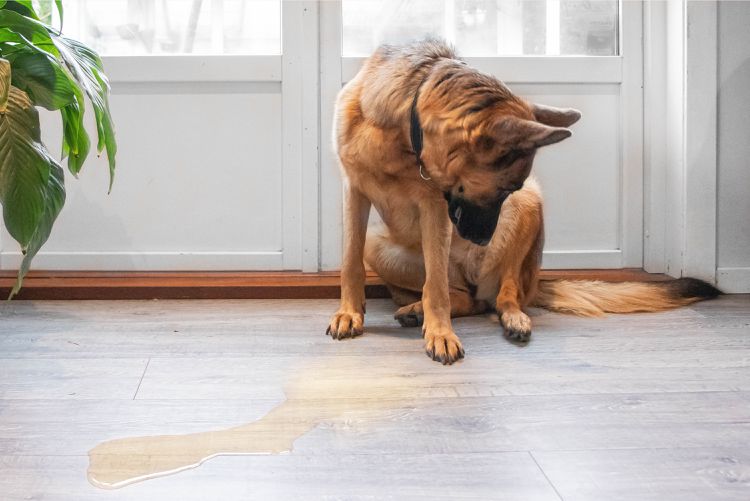
If your house-trained puppy or recently rescued dog pees on the floor when people come over or when you come home, then you might have a dog with a submissive or excitement-based urination issue. Any inappropriate urination, regardless of how or where it occurs, could signal an underlying health problem, so it's worth knowing what submissive or excitement-based urination looks like—and when something more serious may be going on with your dog.
For older dogs, occasional incontinence is not uncommon, but you should have your dog evaluated by your veterinarian in case of a health problem. For house-trained puppies, it often takes some sleuthing to find the root of the problem.
We're here to help you distinguish between submissive and excitement-based urination in your dog and learn how to address it.
Dogs (especially puppies) will sometimes pee when they are in an exciting or overwhelming situation. It may appear to be involuntary, and it often leaves a puddle at their feet or you may find lots of little drops of urine on the floor as they walk or run around the area. This is not the same as dogs who are having urinary accidents in the house or lift their leg to urine mark.
There are a few different reasons why your dog might pee when they are excited or scared, including simply showing they are not a threat or due to their excitement. It is always important to consider your pup may have an underlying health problem causing the problem too.
Dogs who urinate while exhibiting submissive behaviors are typically trying to send a signal that they are not a threat. These dogs may pee when someone approaches, stands over them, or uses a loud voice. Ironically, dogs may urinate submissively if there's a history of rough treatment or punishment after inappropriately peeing as the more they are yelled at or scared, the more they urinate as they try to further minimize the threat. This is sometimes seen in rescued dogs and dogs who are shy, anxious, or fearful. Other signs of submissive behavior they may show at the same time include cowering with their tail tucked and ears back and/or rolling over onto their backs to expose their bellies.
Excitement peeing usually happens in puppies, and they sometimes grow out of it. However, they're not going to lose the habit overnight. These are the dogs that tend to pee when they get excited—either while playing, when you come home, or when new people and/or dogs visit. Patience and understanding will go a long way toward training a puppy out of this behavior, and you may have to make some modifications to your routine in the short term to help prevent these accidents.
Inappropriate urination is not always caused by submissive or excitement-based issues. Several health problems can affect your dog's urinary habits and bladder control, including urinary tract infections, bladder stones, cystitis, or inflammation within the bladder. In addition, kidney disease, diabetes, nerve damage, or spinal cord injuries as well as other physical disorders may cause inappropriate or excessive urination. Some dogs also have conditions that may cause them to leak urine or urinate without any awareness, known as incontinence, and this can be congenital or something that develops later in life.
It is important to note that intact male dogs will mark, or lift their leg and intentionally urinate on things. This is normal behavior for male dogs, although ideally, they restrict this activity to outside of the house only. If your dog is neutered, that usually resolves the behavior completely or at least reduces how much they mark quite a bit. If the behavior continues long after neutering, speak with your veterinarian about ways to work on modifying the behavior and ruling out any underlying medical problems.
Before trying to address submissive or excitement-based urination, it's essential to take your dog to the veterinarian to rule out any health problems. A urinalysis will test your dog's urine for common problems including infection, which can be treated with antibiotics. Other diagnostic tests like X-rays and an ultrasound can look for problems within the urinary tract including bladder stones, cystitis, or certain kidney problems. In addition, your vet can do blood work to check for any indications of metabolic, endocrine, or organ disease. Many conditions that cause dogs to pee excessively or uncontrollably can be treated medically, although some may require surgery.
To treat submissive peeing, do not hit, scold, or yell at your dog after they have peed. Instead, attempt to build your dog's confidence by teaching basic cues (sit, stay, come), using positive reinforcement methods. This is the same reward-and-praise process used to teach simple tricks (rollover, fetch). You'll also want to modify how you interact with your dog using the following non-threatening postures:
To help your puppy with excitement-based urination, maintain a calm, quiet demeanor and be consistent.
All these things should not only help your dog break the habit of peeing when excited but will also help you cultivate a calmer, more confident dog.
When you've tried everything but your dog continues peeing when excited or submissive, you may need to consult with a credentialed animal behaviorist. Sometimes, getting a professional point of view on the problem can help—a specialist may be able to see patterns in your puppy's behaviors that you're missing and create a custom behavior modification plan.

Kitten Vaccine Schedule
What vaccines does your kitten need? Learn the typical kitten vaccination schedule and find out what diseases your kitten should be immunized against.
13 Cats Who Love Christmas
Christmas time is exciting for animals too! Check out these 13 cute cats who love Christmas just as much as us humans.
275 Best Male Cat Names for Your Handsome Kitty
There are plenty of male cat names to choose from if you’re looking to add a new tomcat to the family. Here are 275 of our favorite choices for male cat names.
10 Unique Bobtail Cat Breeds
Bobtail cat breeds, including the Manx and Cymric, result from natural genetic mutations. Learn whether one of these cats is right for you.
15 Top Cat Breeds With Big Eyes
A cat with big eyes like a Persian or sphynx has an expressive look that brings out its personality. Take a look at 15 breeds with big peepers.
Khao Manee: Cat Breed Profile, Characteristics & Care
The khao manee (diamond eye cat) is a rare white cat with gem-like eyes and a friendly personality. Learn about the khao manee breed.
How to Care for a Hairless Cat
Hairless cats make great pets but they aren't without their own challenges and requirements. Read on to learn how to best care for your furless feline.
10 Most Intelligent Cat Breeds
Looking for a smart cat? Learn about the pros and cons of 10 intelligent cat breeds, including Burmese and Siamese, to decide if one is right for you.
Top Ten Essential Dog Training Supplies
You don't need a lot of special equipment to train a dog, but some items make it easier. Learn which dog training supplies to get for your dog.
Why Dogs Bury Bones and Other Objects
If you give a dog a bone, he might bury it. Why is that? Learn about this burying behavior in dogs and what it means for your pet.
How to Train Your Dog to Fetch
Not all dogs instinctively know how to play fetch. Learn how to teach your dog to fetch a ball and bring it back for a fun interactive game.
Top 10 Basic Dog Training Commands
Learn basic dog training commands that every dog should know. These can help you overcome common behavior problems and keep your dog safe.
How to Solve Your Dog's Fear of Children
Find out why your dog is afraid of kids and learn ways you can help your canine buddy deal with this phobia.
How to Safely Break Up a Dogfight
A dogfight can be a terrifying event to witness, and trying to break one up can be extremely dangerous. Find out how to stop one without getting injured.
Can Dogs Eat Almonds? Understanding the Risks and Guidelines
Can dogs eat almonds? While a couple likely won't hurt, it's best to avoid feeding your dog this nut. Learn the risks here.
Dog Food Basics
Are you feeding your dog the best way possible? Check out these dog feeding tips to keep your dog healthy and happy.
Can Dogs Eat Edamame? Safety, Benefits, and Prep Tips
Edamame is a protein-rich legume that's safe for dogs to eat in moderation. Learn more about its health benefits, potential risks, and how to prepare it for your pup.
Keeshond: Dog Breed Characteristics & Care
Learn about the keeshond dog, also known as the Dutch Barge Dog. This fluffy spitz breed was bred to guard, but also makes a friendly companion.
Can Dogs Eat Bread?
Is bread a safe snack for you dog? Are there kinds of bread you should avoid? Learn more about whether it's okay to feed your dog bread.
Can Dogs Eat Popsicles?
You might be wondering can dogs eat popsicles? Certain types of frozen treats are safe for your dog, but you need to be aware of ingredients and allergies