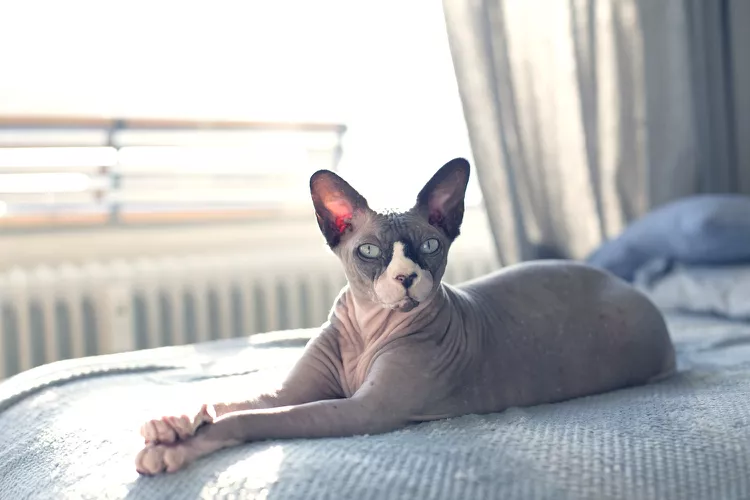
Hairless cats have been popular for decades. This in part to their friendly, sociable, almost dog-like at times demeanor. However, whichever breed of hairless cat your have your heart set on, there are things you should know about their care before you launch headlong into hairless cat ownership. A life without fur can require more upkeep than one might initially think.
Just like people, cat's produce oils in their skin. A hairless cat is not able to wick these oils away from the skin like a furred cat would be able to do. As a result, your hairless cat will accumulate these oils on their skin. To help clean these oils off, hairless cats require weekly baths with warm water and an over-the-counter, hypoallergenic pet shampoo that is free of dyes and perfumes. When bathing, it is important to ensure that all the shampoo is thoroughly rinsed off of your cat, as any residual shampoo left on the skin for an extended period may cause irritation.
It is equally important to ensure that your cat is sufficiently dried after bath time so that they don't get too cold. A simple, gentle pat-down with a towel should do the trick. When not bathed routinely (and sometimes even if you have a bath schedule set) hairless cats can get acne and blackhead breakouts just like people. If your cat does have a breakout, you can clean the area with warm water and mild antibacterial soap. If that doesn't help, a trip to the vet to help get the breakout in check might be in order.
Furred cats not only benefit from fur wicking away the natural oils in their skin, but the fur in the ears also wicks away dirt and debris. Without this fur, the ears of a hairless cat can get quite dirty quite quickly. As with routine bathing, routine ear cleaning (something that could be easily done at the same time as a bath) helps prevent ear infections from excess ear debris. To clean your cat's ears, you will need over-the-counter cat ear cleaner, cotton balls, or cotton rounds. Some tutorials will have your add the cleaner directly into the ear and there is nothing wrong with that method, but most cats aren't very happy about having the cleaner squirted into their ear canal. These cats may be more amenable to you first saturating a cotton ball or cotton round with the ear cleaner and then wiping debris away with the soaked cotton.
As with any cat, regular nail trimming can help prevent your cat from getting stuck on things like blankets and carpeting as well as preventing painful ingrown nails. For hairless cats, though, keeping nails clipped back is even more important. Without fur as a barrier, a hairless cat with long claws may accidentally scratch open wounds on herself. These open wounds could also easily become infected.
Getting your cat comfortable with nail clippings, as with ear cleaning, is easier when they are young, but that doesn't mean you can't train your adult cat to allow a nail clipping. If you are still having difficulty, though, you can always take your cat to the vet and have them clip the nails back for you.
During the fall and winter months, make sure that your cat has access to plenty of blankets and cozy cat beds. There are commercially made self-heated cat beds (that also are great for senior kitties with arthritic bones) that keep kitties warm without the risk of causing overheating or thermal burns. You may also choose to dress your hairless cat in clothing, but your cat may need to be slowly introduced to their new wardrobe. Also know that, due to their predisposition for oily skin, your cat's clothes may need to be washed fairly regularly. Hairless cats will seek heat from people, bedding, or sunlight. Without fur, sunbathing results in the skin getting more direct exposure and increases the risk for sunburns. If a hairless cat likes to sunbathe, their time in the sun may need to be limited.
Fur doesn't just insulate against the cold, though. It can also help regulate a cat's core body temperature in warmer weather. In the spring and summer months, make sure that your hairless cat has plenty of areas where they can cool off, either with air conditioning, fans, or commercially made cooling mats. Additionally, assuming your cat has no dietary restrictions, a popsicle made from freezing a pureed squeeze treat makes a refreshing summertime treat. Remember that hairless cats get chilly easily, so be sure to provide a place for them to get warm even during peak summertime.
If you put in the effort, hairless cats can make great pets. They are known for being particularly friendly and cuddly. This may be partly due to them seeking a warm place to nap, but most cat lovers likely do not care that their cuddly cat has ulterior motives for their snuggles.

Kitten Vaccine Schedule
What vaccines does your kitten need? Learn the typical kitten vaccination schedule and find out what diseases your kitten should be immunized against.
13 Cats Who Love Christmas
Christmas time is exciting for animals too! Check out these 13 cute cats who love Christmas just as much as us humans.
275 Best Male Cat Names for Your Handsome Kitty
There are plenty of male cat names to choose from if you’re looking to add a new tomcat to the family. Here are 275 of our favorite choices for male cat names.
10 Unique Bobtail Cat Breeds
Bobtail cat breeds, including the Manx and Cymric, result from natural genetic mutations. Learn whether one of these cats is right for you.
15 Top Cat Breeds With Big Eyes
A cat with big eyes like a Persian or sphynx has an expressive look that brings out its personality. Take a look at 15 breeds with big peepers.
Khao Manee: Cat Breed Profile, Characteristics & Care
The khao manee (diamond eye cat) is a rare white cat with gem-like eyes and a friendly personality. Learn about the khao manee breed.
How to Care for a Hairless Cat
Hairless cats make great pets but they aren't without their own challenges and requirements. Read on to learn how to best care for your furless feline.
10 Most Intelligent Cat Breeds
Looking for a smart cat? Learn about the pros and cons of 10 intelligent cat breeds, including Burmese and Siamese, to decide if one is right for you.
Top Ten Essential Dog Training Supplies
You don't need a lot of special equipment to train a dog, but some items make it easier. Learn which dog training supplies to get for your dog.
Why Dogs Bury Bones and Other Objects
If you give a dog a bone, he might bury it. Why is that? Learn about this burying behavior in dogs and what it means for your pet.
How to Train Your Dog to Fetch
Not all dogs instinctively know how to play fetch. Learn how to teach your dog to fetch a ball and bring it back for a fun interactive game.
Top 10 Basic Dog Training Commands
Learn basic dog training commands that every dog should know. These can help you overcome common behavior problems and keep your dog safe.
How to Solve Your Dog's Fear of Children
Find out why your dog is afraid of kids and learn ways you can help your canine buddy deal with this phobia.
How to Safely Break Up a Dogfight
A dogfight can be a terrifying event to witness, and trying to break one up can be extremely dangerous. Find out how to stop one without getting injured.
Can Dogs Eat Almonds? Understanding the Risks and Guidelines
Can dogs eat almonds? While a couple likely won't hurt, it's best to avoid feeding your dog this nut. Learn the risks here.
Dog Food Basics
Are you feeding your dog the best way possible? Check out these dog feeding tips to keep your dog healthy and happy.
Can Dogs Eat Edamame? Safety, Benefits, and Prep Tips
Edamame is a protein-rich legume that's safe for dogs to eat in moderation. Learn more about its health benefits, potential risks, and how to prepare it for your pup.
Keeshond: Dog Breed Characteristics & Care
Learn about the keeshond dog, also known as the Dutch Barge Dog. This fluffy spitz breed was bred to guard, but also makes a friendly companion.
Can Dogs Eat Bread?
Is bread a safe snack for you dog? Are there kinds of bread you should avoid? Learn more about whether it's okay to feed your dog bread.
Can Dogs Eat Popsicles?
You might be wondering can dogs eat popsicles? Certain types of frozen treats are safe for your dog, but you need to be aware of ingredients and allergies