5 Egyptian Cat Breeds

15.6K
623
174
2025-10-22
5 Egyptian Cat Breeds

Egyptian cat breeds are among the most ancient breeds. Egypt is one of the places of origin for domesticated cats (the other is the Fertile Crescent in the Middle East). Domestic cats developed from small wildcat species in Egypt as far back as 1500 B.C.

History and Cultural Significance of Egyptian Cat Breeds

Cats are documented as living in ancient Egypt more than 3,000 years ago. Cats provided valuable services protecting grain stores by hunting rodents and killing poisonous snakes in and around Egyptian homes. 

To the Egyptians, cats were considered sacred and an important part of their culture. In life, they were pampered and revered. Egyptian royals even dressed their pet cats in gold and jewels. In death, Egyptians mummified cats and placed them in tombs. The goddess Bastet, who took the form of a cat, appears in many ancient Egyptian works of art.

Egyptian Cat Breeds

Few modern cat species can trace their roots directly back to Egypt, though some people think certain cat breeds are Egyptian when their origins lie in other parts of the world. Read on to meet two cat breeds that truly originated in Egypt and three that people think are Egyptian, but are not.

  • 01 of 05

    Egyptian Mau

    We have no written records of the Egyptian mau’s history, but it’s commonly accepted that the breed has ancient origins and developed from Egyptian street cats. Egyptian drawings show heavily spotted cats with the same mascara markings and barring pattern seen on the modern Egyptian mau. The breed is thought to have first appeared in the United States in 1956 when exiled Russian Princess Nathalie Troubetskoy brought her Egyptian mau cats with her.

    Today, street cats in Egypt are often called Nile Valley Egyptian Cats and many of them resemble the Egyptian mau.

    The Bengal cat breed is believed to have been developed through cross-breeding with the Egyptian mau.

    Breed Overview

    WEIGHT: 6 to 14 pounds

    LENGTH: Up to 16 inches

    PERSONALITY: Playful, active, devoted, loyal, alert, affectionate on their own terms

    COAT LENGTH: Medium-length shorthair

    COAT COLOR: Silver, bronze, or smoke with dark spots of varying sizes that occur only on the tips of the fur. Other characteristics include a dorsal stripe extending along the tail to a dark tail tip. The forehead has an “M” marking and the face has “mascara” lines that start at the corner of the eyes and sweep along the cheeks.

    EYE COLOR: Green

    LIFESPAN: 12 to 15 years

  • 02 of 05

    Chausie

    The medium- to large-sized chausie (pronounced chow-see), is a hybrid breed created by crossbreeding domestic cats and a small wildcat species called the jungle cat that was revered by ancient Egyptians.

    Although the chausie is a modern breed—created in the United States in the 1990s—their jungle cat heritage ties them directly to Egypt. Domestic cats used in the creation of the chausie include the Abyssinian and the domestic shorthair.

    Breed Overview

    Weight: About 15 to 25 pounds

    Length: About 20 to 22 inches

    Personality: Friendly, playful, active, affectionate

    Coat Length: Short to medium, with a dense, soft undercoat and a somewhat resilient, slightly coarser outer coat

    Coat Color: Brown ticked tabby, black grizzled ticked tabby or black

    Eye Color: Any color, including blue or odd-eyed

    Life Expectancy: 15 to 20 years

  • 03 of 05

    Abyssinian

    The small, shorthaired Abyssinian is one of the oldest cat breeds. Perhaps due to the breed’s striking resemblance to the cats depicted in ancient Egyptian hieroglyphs, many sources identify the Abyssinian cat’s country of origin as Egypt or Ethiopia (formerly known as Abyssinia). However, the most recent genetic research suggests the coast of the Indian Ocean and parts of Southeast Asia as the most likely birthplace of the Abyssinian cat.

    The breed name Abyssinian came about because, in the 1800s, some English fanciers imported cats matching the description of today’s Abyssinian and exhibited them at cat shows in England, stating that the cats were obtained from Abyssinia. 

    Breed Overview

    WEIGHT: Up to 12 pounds

    LENGTH: Up to 28 inches

    PERSONALITY: Friendly, interactive, animated, active, and playful

    COAT LENGTH: Short hair

    COAT COLOR: Solid or ticked; ruddy, red, blue, cinnamon, or fawn

    EYE COLOR: Green or gold

    LIFESPAN: Up to 15 years

  • 04 of 05

    Savannah

    With their spotted coat, the Savannah cat might look like cats in Egyptian art, but they were developed in the United States in the 1980s by crossing a small, African wildcat species called the serval with domestic cats. Like their serval relative, the Savannah cat is tall and slender with a long neck, large ears, and a gorgeous spotted coat. This breed needs more exercise and mental stimulation than most cats, so don't plan to bring one home unless you can give them the exercise and stimulation they need to be healthy and happy.

    Breed Overview

    WEIGHT: 12 to 25 pounds

    LENGTH: 20 to 22 inches

    PERSONALITY: Affectionate and social with owners, pets, and older children; intelligent and trainable

    COAT LENGTH: Short to medium hair

    COAT COLOR: Tawny, black/brown spotted tabby, black/silver spotted tabby, or black smoke with a solid or tabby pattern

    EYE COLOR: Amber or green

    LIFESPAN: Up to 20 years

    Continue to 5 of 5 below
  • 05 of 05

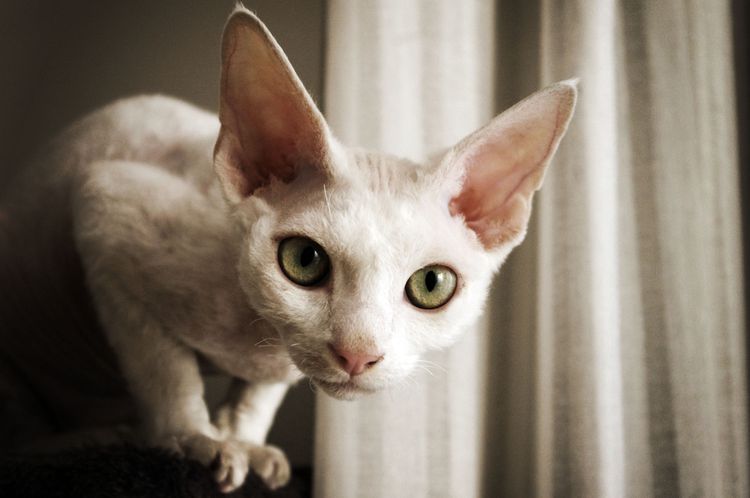
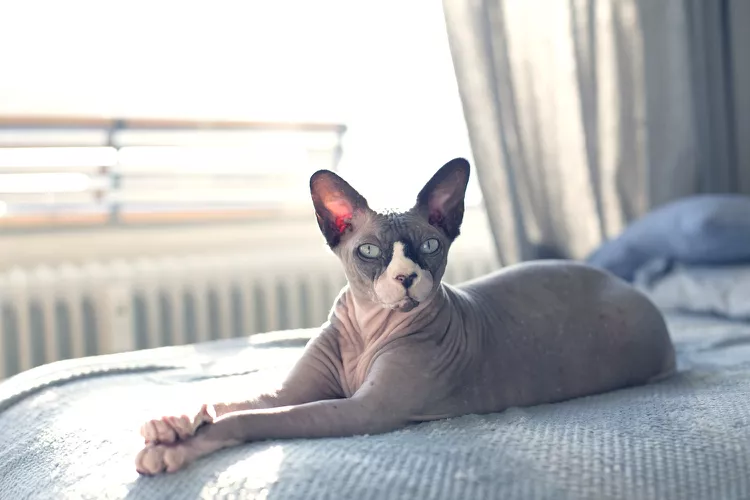
    Sphynx

    Many people think that the Sphynx cat comes from Egypt due to their resemblance to ancient Egyptian depictions of cats. It’s also possible that people confuse the Sphnyx cat with the mythical sphinx—a creature with the head of a human, body of a lion, and wings of an eagle. Ancient Egyptians believed the sphinx could guard royalty, so they built many statues of the sphinx, including the most famous: the Great Sphinx of Giza.

    Alas, the wrinkled, hairless Sphynx cat claims Canada, as their birthplace. Sphynx cats feel like warm suede or chamois because they are covered in a soft down. Sphynx don’t shed and need no brushing, but they must be bathed somewhat regularly to remove any buildup of skin oils and to keep their skin healthy.

    Breed Overview

    WEIGHT: Less than 12 pounds

    LENGTH: 13 to 15 inches, head to tail

    PERSONALITY: Playful, affectionate, friendly, energetic, and loving

    COAT LENGTH: Nearly hairless, peach fuzz

    COAT COLOR: Any color, including white, black, red, brown, white, and lilac

    EYE COLOR: Any color

    LIFESPAN: 8 to 14 years

More Cat Breeds and Further Research

To explore more cat breeds, check out:

Article "tagged" as:

Related Article

Kitten Vaccine Schedule
14.8K
1K
382

Kitten Vaccine Schedule

What vaccines does your kitten need? Learn the typical kitten vaccination schedule and find out what diseases your kitten should be immunized against.
13 Cats Who Love Christmas
1.8K
178
28

13 Cats Who Love Christmas

Christmas time is exciting for animals too! Check out these 13 cute cats who love Christmas just as much as us humans.
275 Best Male Cat Names for Your Handsome Kitty
8.8K
525
99

275 Best Male Cat Names for Your Handsome Kitty

There are plenty of male cat names to choose from if you’re looking to add a new tomcat to the family. Here are 275 of our favorite choices for male cat names.
10 Unique Bobtail Cat Breeds
35.2K
704
239

10 Unique Bobtail Cat Breeds

Bobtail cat breeds, including the Manx and Cymric, result from natural genetic mutations. Learn whether one of these cats is right for you.
15 Top Cat Breeds With Big Eyes
12K
1.1K
247

15 Top Cat Breeds With Big Eyes

A cat with big eyes like a Persian or sphynx has an expressive look that brings out its personality. Take a look at 15 breeds with big peepers.
Khao Manee: Cat Breed Profile, Characteristics & Care
15.8K
472
226

Khao Manee: Cat Breed Profile, Characteristics & Care

The khao manee (diamond eye cat) is a rare white cat with gem-like eyes and a friendly personality. Learn about the khao manee breed.
How to Care for a Hairless Cat
45.6K
911
318

How to Care for a Hairless Cat

Hairless cats make great pets but they aren't without their own challenges and requirements. Read on to learn how to best care for your furless feline.
10 Most Intelligent Cat Breeds
46.2K
3.2K
678

10 Most Intelligent Cat Breeds

Looking for a smart cat? Learn about the pros and cons of 10 intelligent cat breeds, including Burmese and Siamese, to decide if one is right for you.
Top Ten Essential Dog Training Supplies
17.6K
351
87

Top Ten Essential Dog Training Supplies

You don't need a lot of special equipment to train a dog, but some items make it easier. Learn which dog training supplies to get for your dog.
Why Dogs Bury Bones and Other Objects
35.8K
1.8K
321

Why Dogs Bury Bones and Other Objects

If you give a dog a bone, he might bury it. Why is that? Learn about this burying behavior in dogs and what it means for your pet.
How to Train Your Dog to Fetch
46.5K
1.9K
279

How to Train Your Dog to Fetch

Not all dogs instinctively know how to play fetch. Learn how to teach your dog to fetch a ball and bring it back for a fun interactive game.
Top 10 Basic Dog Training Commands
45.1K
2.7K
1.1K

Top 10 Basic Dog Training Commands

Learn basic dog training commands that every dog should know. These can help you overcome common behavior problems and keep your dog safe.
How to Solve Your Dog's Fear of Children
34.1K
3.4K
1.5K

How to Solve Your Dog's Fear of Children

Find out why your dog is afraid of kids and learn ways you can help your canine buddy deal with this phobia.
How to Safely Break Up a Dogfight
34.7K
3.1K
969

How to Safely Break Up a Dogfight

A dogfight can be a terrifying event to witness, and trying to break one up can be extremely dangerous. Find out how to stop one without getting injured.
Can Dogs Eat Almonds? Understanding the Risks and Guidelines
37.5K
1.1K
191

Can Dogs Eat Almonds? Understanding the Risks and Guidelines

Can dogs eat almonds? While a couple likely won't hurt, it's best to avoid feeding your dog this nut. Learn the risks here.
Dog Food Basics
18.3K
182
61

Dog Food Basics

Are you feeding your dog the best way possible? Check out these dog feeding tips to keep your dog healthy and happy.
Can Dogs Eat Edamame? Safety, Benefits, and Prep Tips
42.3K
2.1K
443

Can Dogs Eat Edamame? Safety, Benefits, and Prep Tips

Edamame is a protein-rich legume that's safe for dogs to eat in moderation. Learn more about its health benefits, potential risks, and how to prepare it for your pup.
Keeshond: Dog Breed Characteristics & Care
49K
2K
959

Keeshond: Dog Breed Characteristics & Care

Learn about the keeshond dog, also known as the Dutch Barge Dog. This fluffy spitz breed was bred to guard, but also makes a friendly companion.
Can Dogs Eat Bread?
43.5K
434
47

Can Dogs Eat Bread?

Is bread a safe snack for you dog? Are there kinds of bread you should avoid? Learn more about whether it's okay to feed your dog bread.
Can Dogs Eat Popsicles?
18.3K
1.1K
328

Can Dogs Eat Popsicles?

You might be wondering can dogs eat popsicles? Certain types of frozen treats are safe for your dog, but you need to be aware of ingredients and allergies