
- 01 of 10
Scottish Fold
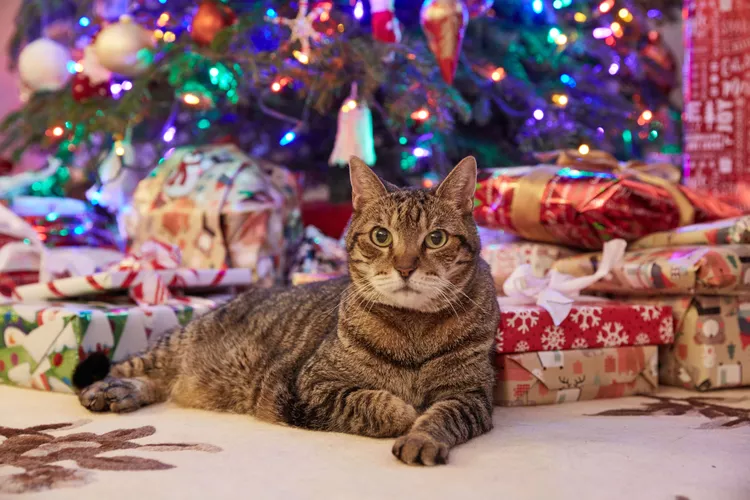
Named after their cute folded ears, Scottish Fold cats have a unique look. The folds are produced by a gene that affects ear cartilage, but because the gene isn’t completely dominant, not all Scottish folds have folded ears. Either way, these cats are adorable. The original Scottish fold was a barn cat in Scotland that was bred for its distinct folded ears throughout the United Kingdom in the 1960s. Now, they’re popular pets among celebrities across the globe, including American singer Taylor Swift.
Breed Overview
Height: 8 to 10 inches
Weight: 6 to 14 pounds
Physical Characteristics: Medium-sized body; small ears that fold forward and downward; medium coat
- 02 of 10
Norwegian Forest Cat
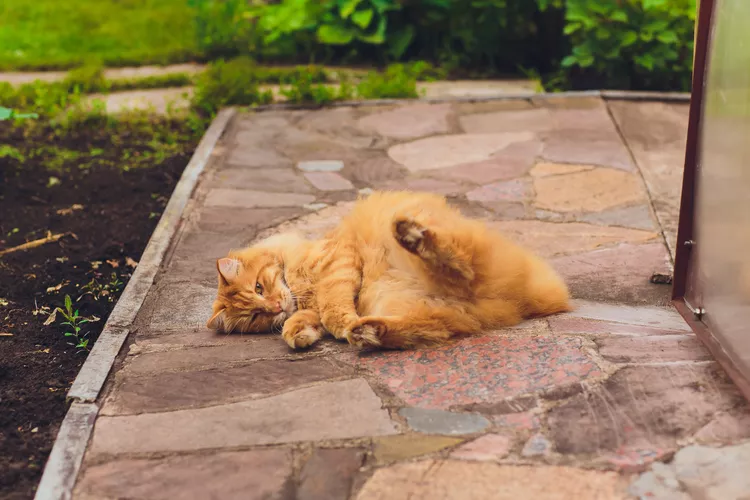
The name gives away the origins of the Norwegian forest cat breed. Called the skogkatt in Norway, it is a natural European breed descended from domestic cats first introduced by the ancient Romans. Norse myths suggest the cats were in Norway for hundreds of years. The Norwegian forest cat started to gain popularity in the U.S. in the 1980s. Americans fell in love with the cats for their playful personalities and natural athleticism.
Breed Overview
Height: 9 to 12 inches
Weight: 13 to 20 pounds
Physical Characteristics: Long, double coat in multiple colors; larger size; almond-shaped eyes
- 03 of 10
Sphynx
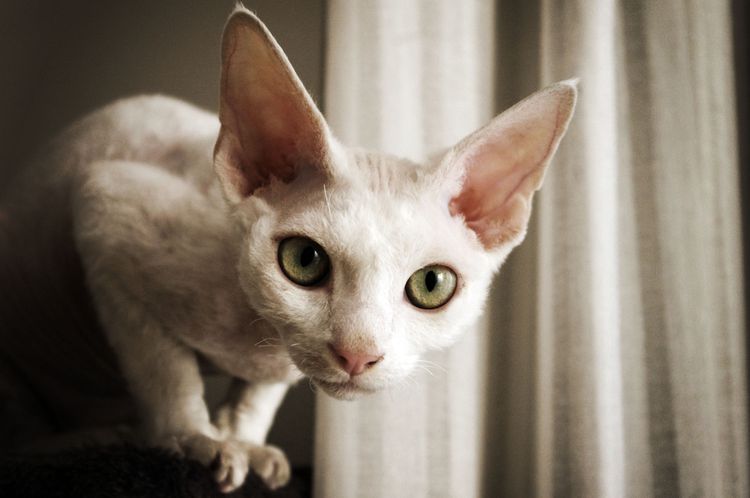
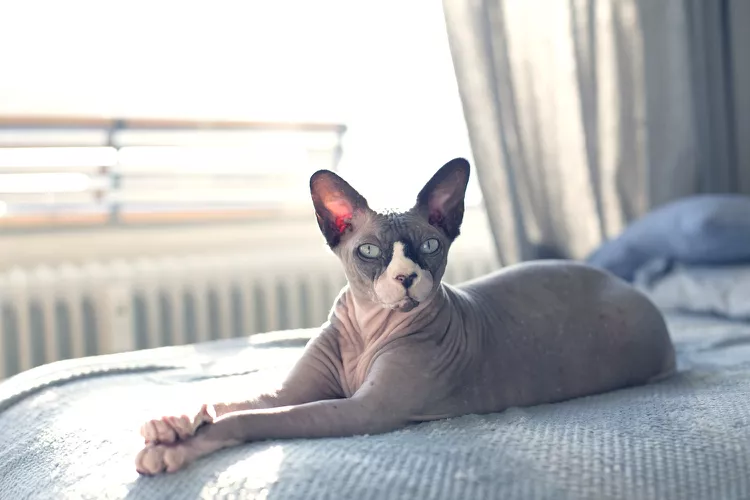
The sphynx breed is easily identified by its distinct physical features—giant ears and hairless body. These cats are excellent pets for those who suffer from severe allergies. Because they have no hair, these felines are almost always cold, meaning they are almost always looking for snuggles. Hairless cats have been recorded throughout history, including ancient Egypt. The current American sphynx breed descended from cats in Minnesota and Canada that had natural mutations preventing hair growth. While there are some other hairless breeds, the sphynx breed is unique for being exceptionally social. Sphynxes love their owners and are affectionate and playful.
Breed Overview
Height: 8 to 10 inches
Weight: 6 to 12 pounds
Physical Characteristics: Hairless; variable skin color; angular head
- 04 of 10
Egyptian Mau
As the only natural domesticated breed of spotted cat, the Egyptian mau is often sought for its stunning coat. But besides their ravishing good looks, these cats are also known for their quality companionship and hunting prowess. First thought to be pets of the ancient Egyptians thousands of years ago, Egyptian maus may be one of the oldest domestic cat breeds. Maus were brought into the U.S. in the 1980s when they captured the hearts of cat lovers across the nation.
Breed Overview
Height: 8 to 10 inches
Weight: 7 to 9 pounds
Physical Characteristics: Athletic body; natural spotted coat; medium-sized; rounded head
Continue to 5 of 10 below - 05 of 10
Korat
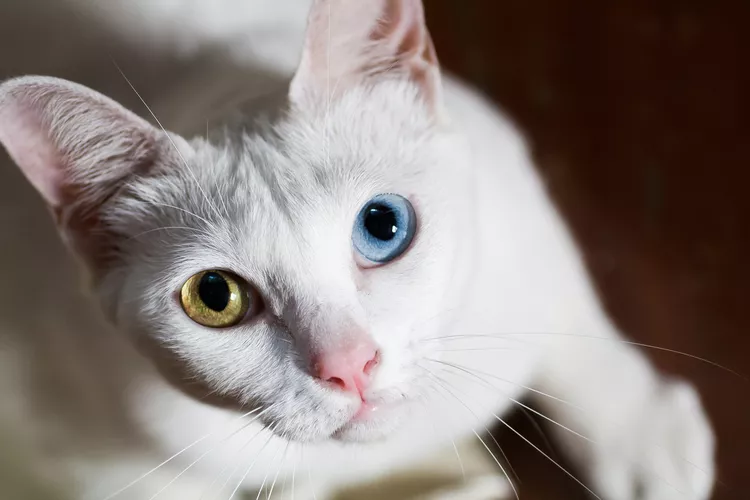
Korat cats have only been popular in the U.S. for a few decades, but their history goes back thousands of years. The breed is originally from Thailand, where it was first found recorded in ancient artifacts from the 13th century. In the 1800s, they were introduced to Europe and became known as “blue Siamese” cats because of their solid blue coats, relatively petite bodies, and wide, luminous eyes. Korats appeared in the U.S. in the 1950s. By 1966, the American Cat Fancier’s Association (ACFA) allowed them to compete in the championship class.
Breed Overview
Height: 10 to 12 inches
Weight: 6 to 10 pounds
Physical Characteristics: Muscular body; short blue-grey coat; heart-shaped face; luminous green eyes
- 06 of 10
British Shorthair
If you’re looking for a goofy or mischievous feline companion, then the British shorthair may not be for you. Instead, their personality is quiet, calm, and generally reserved. British shorthair cats are native to Great Britain, though they may have been an import when the Romans invaded the country in the first century A.D. British shorthairs are also known as British blue cats due to their blue-grey coats. The American Cat Association recognized them in 1967. It’s a relatively uncommon breed, but they are known to be top-notch companions.
Breed Overview
Height: 12 to 14 inches
Weight: 7 to 17 pounds
Physical Characteristics: Short and dense coat; colors include white, black, red, cream, blue, and more; rounded features
- 07 of 10
Peterbald
Peterbald cats don’t have a long history, but it is interesting. The unique cat was first reported in the 1980s in a town called Don in Russia. It was called the Don sphynx due to its hairlessness. In 1993, the new breed was sent to St. Petersberg, Russia, where scientists bred a fine oriental shorthair cat with a Don sphynx. One of their kittens became the foundation of the Peterbald breed. In May 2008, the ACFA accepted the Peterbald for championship class competition. The breed remains a rare yet highly desired pet in the U.S.
Breed Overview
Height: 8 to 10 inches
Weight: 7 to 14 pounds
Physical Characteristics: Long and slender body; hairless; large, pointed ears; triangle-shaped heads
- 08 of 10
Minskin
Cross a munchkin cat with a sphynx, and you’ve got a minskin. Minskins get their short, squat bodies from the munchkin and their extremely sparse coats from the sphynx—giving you a distinct-looking cat. The first official minskin came from Boston, Massachusetts, in 2000. After five years, the minskin pool had grown to about 50 cats, and the breed was registered by The International Cat Association (TICA). The adorable and outgoing breed is part of a TICA program that monitors the development of new breeds.
Breed Overview
Height: 7 to 8 inches
Weight: 4 to 6 pounds
Physical Characteristics: Small body; short legs; nearly hairless with sparse hair around extremities only; rounded head
Continue to 9 of 10 below - 09 of 10
American Bobtail
Despite the American bobtail cat’s physical similarities to wild bobcats, these felines are fully domesticated and make wonderful pets. This unique breed can be difficult to find. The American bobtail has been in North America since the 1960s, but it didn’t gain popularity until the 2000s. The original bobtail was a cat found at a motel in Arizona, and experts believe it was abandoned there. The cat may be a cross between a bobcat and a domestic house cat due to his feral appearance and distinct bobtail.
Breed Overview
Height: 8 to 10 inches
Weight: 7 to 16 pounds
Physical Characteristics: Short, bobbed tails; almond-shaped eyes; come in any color or pattern; variable coat length
- 10 of 10
LaPerm
LaPerms are named for their curly or wavy fur that comes in a variety of colors and patterns. The coat can have tight ringlets or long corkscrew curls. The LaPerm was a spontaneous genetic mutation in a regular litter of tabby farm cats in the 1980s in Oregon. In the 1990s, the Cat Fancy Association suggested starting a breeding program for this unique and rarely seen quality in a cat's coat. By 2008, the breed achieved CFA champion status.
Breeds to Avoid
The most common cat owned by Americans is the domestic shorthair, in other words, a mixed-breed house cat. You'll likely want to avoid going to an animal rescue if what you want is a purebred kitty. The animal shelters are usually full of mixed-breed "moggies," as the British affectionately call them.
If rare is what you're after, you'd be good with any purebred cat, including the more popular ragdoll, Persian, or Siamese. It is estimated between 70 to 90 million cats are owned by Americans, and of that number, less than 10 percent are pedigreed or purebred felines.