Your new kitten deserves the best start in life, and this means providing everything she needs to grow and stay healthy. Kitten vaccines are essential to prevent your kitten from getting sick and avoid the spread of disease. Here are the vaccines your kitten may need and the typical kitten vaccine schedule recommended by veterinarians.
Kittens need vaccines to protect them from certain serious diseases. A vaccine is designed to trigger an immune response and prevent future infection from that disease.
When kittens are born, their immune systems are not fully developed and they are unable to fight disease on their own. Fortunately, nursing mothers provide antibody-rich milk called colostrum that gives kittens temporary immunity against illness. The length of this immunity varies from kitten to kitten, but protection from maternal antibodies generally fades within a few weeks.
There is no easy way to know exactly when a kitten is vulnerable to a specific disease. In an effort to protect kittens from diseases, veterinarians administer vaccinations at strategic intervals.
Fortunately, a vaccine injection itself is typically not very painful. Your kitten may feel a little pinch or sting, but many do not notice at all. Plus, many vets use treats or toys to distract the kitten and make the experience more fun.
Certain vaccines provide immunity against the most dangerous and widespread diseases. Veterinarians call these core vaccines, and they're considered essential for all kittens and adult cats, regardless of lifestyle or location.
Non-core vaccines are recommended for cats and kittens who may be exposed to certain diseases due to geographical locations or an outdoor lifestyle. Your veterinarian can help you decide if your kitten needs any non-core vaccines.
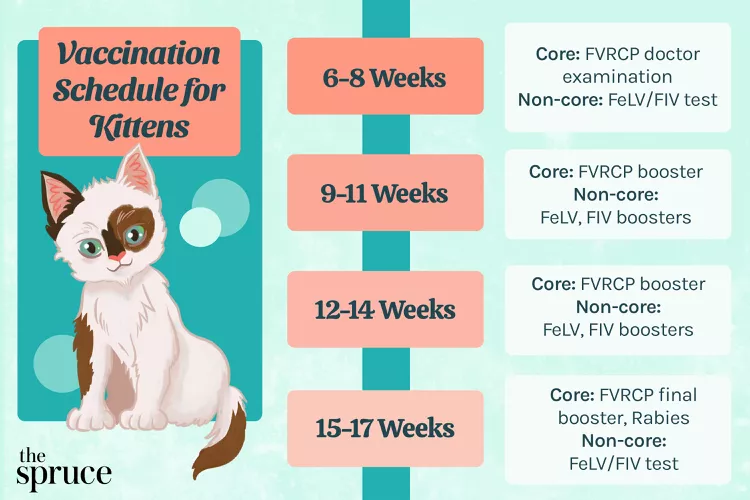
Kittens receive a series of vaccines over an 8- to 12-week period beginning at between 6 and 8 weeks of age. Boosters of some vaccines are given about three to four weeks apart until approximately 16 to 20 weeks of age.
At your kitten's first veterinary exam, your veterinarian will discuss a vaccine schedule as well as other treatments, such as deworming and beginning parasite prevention. Some vaccines might be given together in one injection which is called a combination vaccine.
At the first vaccine visit, your veterinarian will do an examination before vaccinating your kitten. Vaccines should never be given to a kitten with a fever or illness as the vaccine will not be effective. Giving a vaccine to a sick kitten can actually make her feel worse.
It takes about seven to 10 days for a vaccination to become effective, and some need to be repeated in three to four weeks. However, kittens with remaining maternal antibodies for that disease will not be affected by the vaccine. Since there is no way to be certain if a kitten still has maternal antibodies, boosters are necessary. True immunity is uncertain until about 16 to 18 weeks of age, or until all kitten boosters are completed. Avoid exposing your kitten to unknown animals until all vaccinations have been given.
Rabies is a fatal virus that can affect cats as well as humans. This is a core vaccine that is generally required by law because of how serious this disease is. All kittens and adult cats should be vaccinated against rabies. Most vets recommend giving this vaccine around 16 weeks of age and repeating it every one to three years.
FVRCP stands for feline viral rhinotracheitis, calicivirus, and panleukopenia. This is a core vaccine considered essential for all kittens; it's generally given at 6 to 8 weeks of age and repeated every three to four weeks until around 16 weeks of age.
Calicivirus and rhinotracheitis are common feline viruses known to cause upper respiratory infections in cats. Panleukopenia, commonly referred to as feline distemper, is a highly contagious and often fatal disease that attacks rapidly growing and dividing cells like those in the intestines, bone marrow, and the developing fetus.
FeLV or feline leukemia virus is a vaccine that is considered non-core in low-risk adult cats but is often considered core for all cats less than a year old. Adult cats who will spend time outdoors should get this vaccine booster annually. Kittens typically get their first FeLV vaccine between 9 and 11 weeks of age, and then a booster three to four weeks later.
Feline leukemia is one of the most common infectious diseases in cats. It is spread most commonly through social contact with infected cats. FeLV can cause a variety of health issues in cats, including cancer and immune system disorders.
FIV stands for feline immunodeficiency virus, a common feline virus spread most commonly by bite wounds. This vaccine is no longer available in North America. It was considered non-core and recommended only for cats at a very high risk of exposure to FIV. Though many FIV-positive cats can live normal lives, those adversely affected will suffer from various illnesses due to immune system dysfunction.
Every veterinarian has certain preferences about the order and frequency of additional procedures such as examinations, deworming, and testing. Talk to your vet about the best schedule for your kitten.
Although there are some risks associated with vaccinations, they are relatively uncommon. Vaccine reactions and side effects are typically minor and often go away on their own. These may include pain and swelling at the injection site, lethargy, or a mild fever.
Some cats will experience an allergic reaction to ingredients in the vaccine. Severe allergic reactions are uncommon but can be fatal if left untreated. If your kitten develops hives, facial swelling, vomiting, diarrhea, or difficulty breathing, go to the nearest open vet immediately. Mild reactions may resolve on their own, but call your veterinarian to report any signs just to make sure.
Feline injection site sarcomas have been associated with vaccinations and other injections in cats. These tumors are rare and the cause of their formation is not fully understood. While a small knot developing at a vaccination site is a common and mild reaction, any mass at an injection site should be evaluated by a veterinarian if it lasts more than three months, is more than two centimeters in size, or gets larger more than a month after vaccination. Vaccines are now commonly given low on the limbs (below the elbow or knee) so the limb can be amputated if a tumor develops.
Because vaccinations stimulate the immune system, there is a slight risk of developing an autoimmune disorder. This is extremely uncommon when you consider the numbers of pets affected versus all the pets that are vaccinated. However, autoimmune disorders can be serious and difficult to treat. Illnesses that may occur include blood disorders, neuromuscular issues, and even skin problems.
Most veterinarians and pet experts agree that the benefits outweigh the risks when it comes to vaccines, especially for young animals. When it comes to adult cat vaccines, many vets are embracing protocols that vaccinate less often. Once given annually, many adult vaccinations are now more likely to be recommended every three years. However, it's still important to visit the vet forroutine check-ups, which are typically recommended annually.
Depending on your location, kitten vaccination may cost around $300 for the first year, give or take. If you've adopted your kitten group, it should come partially vaccinated, depending on its age, and that cost is part of your adoption fee. (Please note: adopting kittens this way is a great way to both save a life, and save some cash!)
After the initial kitten series of rabies vaccines, cats may need to be vaccinated every one to three years for rabies. The frequency depends on your state's laws and the availability of three-year feline rabies vaccines.
Rabies, feline panleukopenia (feline distemper), feline herpesvirus, feline calicivirus, and feline leukemia (FeLV) can all be prevented with vaccination.
Kitten Vaccine Schedule
What vaccines does your kitten need? Learn the typical kitten vaccination schedule and find out what diseases your kitten should be immunized against.
13 Cats Who Love Christmas
Christmas time is exciting for animals too! Check out these 13 cute cats who love Christmas just as much as us humans.
275 Best Male Cat Names for Your Handsome Kitty
There are plenty of male cat names to choose from if you’re looking to add a new tomcat to the family. Here are 275 of our favorite choices for male cat names.
10 Unique Bobtail Cat Breeds
Bobtail cat breeds, including the Manx and Cymric, result from natural genetic mutations. Learn whether one of these cats is right for you.
15 Top Cat Breeds With Big Eyes
A cat with big eyes like a Persian or sphynx has an expressive look that brings out its personality. Take a look at 15 breeds with big peepers.
Khao Manee: Cat Breed Profile, Characteristics & Care
The khao manee (diamond eye cat) is a rare white cat with gem-like eyes and a friendly personality. Learn about the khao manee breed.
How to Care for a Hairless Cat
Hairless cats make great pets but they aren't without their own challenges and requirements. Read on to learn how to best care for your furless feline.
10 Most Intelligent Cat Breeds
Looking for a smart cat? Learn about the pros and cons of 10 intelligent cat breeds, including Burmese and Siamese, to decide if one is right for you.
Top Ten Essential Dog Training Supplies
You don't need a lot of special equipment to train a dog, but some items make it easier. Learn which dog training supplies to get for your dog.
Why Dogs Bury Bones and Other Objects
If you give a dog a bone, he might bury it. Why is that? Learn about this burying behavior in dogs and what it means for your pet.
How to Train Your Dog to Fetch
Not all dogs instinctively know how to play fetch. Learn how to teach your dog to fetch a ball and bring it back for a fun interactive game.
Top 10 Basic Dog Training Commands
Learn basic dog training commands that every dog should know. These can help you overcome common behavior problems and keep your dog safe.
How to Solve Your Dog's Fear of Children
Find out why your dog is afraid of kids and learn ways you can help your canine buddy deal with this phobia.
How to Safely Break Up a Dogfight
A dogfight can be a terrifying event to witness, and trying to break one up can be extremely dangerous. Find out how to stop one without getting injured.
Can Dogs Eat Almonds? Understanding the Risks and Guidelines
Can dogs eat almonds? While a couple likely won't hurt, it's best to avoid feeding your dog this nut. Learn the risks here.
Dog Food Basics
Are you feeding your dog the best way possible? Check out these dog feeding tips to keep your dog healthy and happy.
Can Dogs Eat Edamame? Safety, Benefits, and Prep Tips
Edamame is a protein-rich legume that's safe for dogs to eat in moderation. Learn more about its health benefits, potential risks, and how to prepare it for your pup.
Keeshond: Dog Breed Characteristics & Care
Learn about the keeshond dog, also known as the Dutch Barge Dog. This fluffy spitz breed was bred to guard, but also makes a friendly companion.
Can Dogs Eat Bread?
Is bread a safe snack for you dog? Are there kinds of bread you should avoid? Learn more about whether it's okay to feed your dog bread.
Can Dogs Eat Popsicles?
You might be wondering can dogs eat popsicles? Certain types of frozen treats are safe for your dog, but you need to be aware of ingredients and allergies