Azawakh: Dog Breed Characteristics & Care
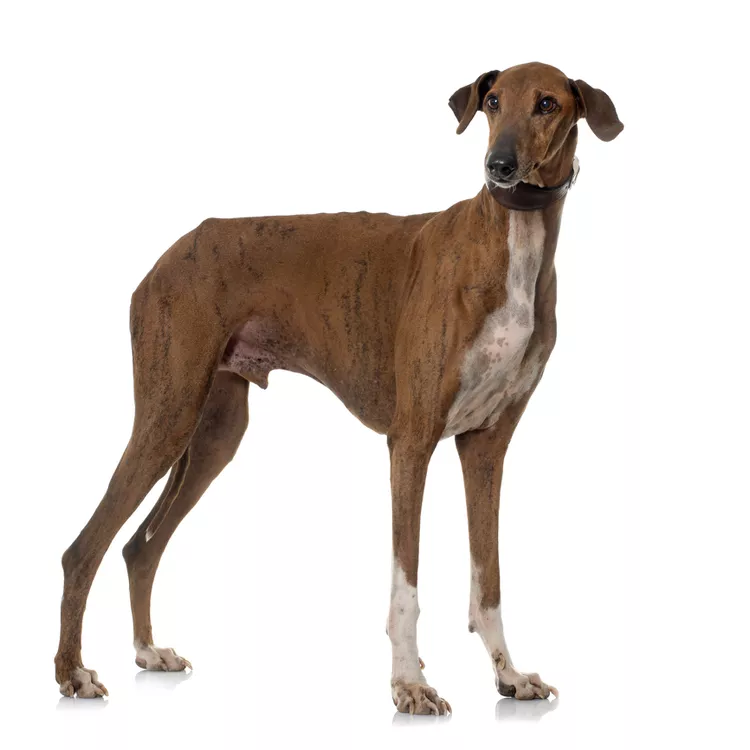
The Azawakh (pronounced AH-ZA-WAHK) is a medium-sized, but tall and ancient dog breed originating from the West African Sahara Desert. It's known for its graceful, slender body and expressive almond-shaped eyes. The dog is generally fiercely loyal and calm around the home, but can be aloof or wary around strangers along with a high prey drive.
GROUP: Hound
HEIGHT: 25 to 29 inches (males); 23 to 27 inches (females)
WEIGHT: 45 to 55 pounds (males); 33 to 44 pounds (females)
COAT: Short, fine coat, but the stomach may be hairless
COAT COLOR: A variety of colors include sand to dark red, white, black, blue, gray, brindle, grizzle, and all shades of brown, including chocolate.
LIFE SPAN: 12 to 15 years
TEMPERAMENT: Refined, attentive, aloof, gentle, and playful
HYPOALLERGENIC: No
ORIGIN: West Africa
Characteristics of the Azawakh
An Azawakh can sometimes become overly protective of its territory and humans if it feels threatened. Its reaction to strangers can vary from friendly, to uninterested, to wary, or aggressive. If this dog does take on the role of protector, it can be quite vocal too. Though protective, it isn't the best dog for small children. Since the Azawakh was not bred to be a companion, it may act aloof even with children within the family.
History of the Azawakh
The Azawakh is a sighthound originating from the West African Sahara Desert. It was first bred primarily to guard the livestock of nomadic pastoralist owners, particularly the Tuareg people. The breed was also highly regarded for its companionship and hunting skills, and often worked in packs. The dog's breeding means it's well adapted to living in the harsh desert climes.
The breed's name comes from the Azawakh Valley which lies in the desert between Mali and Niger, and it translates to "Land of the North."
In 1970, a Yugoslavian diplomat was gifted a male Azawakh from the nomadic people he had developed a relationship with, and then he also bartered to receive a female. This pair is believed to be the first of the breed to be exported.
Further dogs were then exported by French civil servants and military forces stationed in the region. They then began to be introduced across other parts of Europe and into the United States.
The breed is closely related to another African sighthound called the Sloughi and, when it was first exported, the dog was referred to as the Sloughi-Azawakh. In 1980, the breed became recognized solely as Azawakhs.
It was only recognized as an official breed by the American Kennel Club in 2011 and it's still relatively rare outside of their native Sahel region.
Azawakh Care
Azawakh are known for being intelligent, affectionate, and exceptionally loyal to their family members. They are still often independent in spirit, though. They are probably not the best dog for novice owners. Their unique personalities mean they can require a lot of additional training.
Their hunting instincts mean that they can have a high prey drive. Although they can get on well with cats, careful introductions should be made to ensure their chase instincts are not triggered.
Exercise
Like some other sighthounds, they can be referred to as speedy couch potatoes. Providing they get enough daily exercise, and the opportunity to release some of their energy, they will often then be happy to laze around on the couch. A good run in a fence-enclosed yard and brisk walk, totaling about an hour a day, will be sufficient to wear out your Azawakh. This breed's stamina also makes it a great running companion.
The Azawakh's thin coat, minimal body fat, and desert origins mean it doesn't like the cold. In the winter months, you will need to make sure your dog is kept warm on walks.
Grooming
The breed has low-maintenance and basic grooming requirements. Its coat will only need a rub down around once a week to keep it shiny and in good condition.
Training
Early and appropriate socialization, and ongoing positive reinforcement training around new people will be important to help your dog avoid developing an extreme reaction to strangers. You may have to work extra hard to achieve a solid recall if your pet is driven to chase. You should not allow an Azawakh off-leash in open spaces until you have achieved this difficult feat.
Common Health Problems
The Azawakh is regarded as a generally healthy and robust breed. Given the rarity of this breed, though, means there is a small gene pool. You should find a breeder that carries out health tests on parents to minimize the chances of your puppy developing an inheritable condition.
Some of the conditions this breed is known for developing include:
- Hypothyroidism: This is when the dog's thyroid is underactive and its metabolic rate decreases. This can lead to weight gain, loss of general condition, fatigue, and changes in behavior. Once diagnosed, it can be managed well with medication.
- Idiopathic Epilepsy: An Azawakh is prone to sudden, seemingly spontaneous seizures. These can range in their severity and reoccurrence rate. Depending on their nature, the seizures can often be successfully managed through medication and changes in lifestyle and diet. You should always consult your veterinarian if your dog suffers from a seizure.
- Auto-immune mediated diseases: The breed can suffer from several diseases triggered by an abnormal response from the immune system. These can include the skin condition Demodectic Mange, muscle wastage, and it can even trigger hypothyroidism.
Diet and Nutrition
It is important to feed any dog high quality food and an appropriately portion-controlled diet. The breed is naturally very slim, and there can be a tendency to overfeed them to try to fatten them up. Just because you can see the dog's ribs, it does not mean that your Azawakh is underweight. If you overfeed this breed, it can lead to obesity. This can result in a whole host of further help problems, and it can put a strain on the dog's delicate joints. If in doubt, it is worth seeking advice from your veterinarian.
Where to Adopt or Buy an Azawakh
As with any dog, if you are buying a puppy, you should do your research and find a quality breeder. Always make sure that you can see mom and puppies together in a secure home environment. The puppies should not be released to their new homes until they are at least eight weeks old and fully weaned.
Because of the scarcity of the Azawakh breed, you may need to be on a waiting list, or travel further afield to secure a puppy. If you are lucky enough to work with a quality breeder, expect to pay on average $3,000 for an Azawakh puppy.
A good place to start your research would be with the following:
- American Azawakh Association (this group may have a rare rescue situation)
- AKC Marketplace
Azawakh Overview
Very affectionate with their family members
Calm in the house if they are given enough exercise
Low-maintenance grooming regime
Can be aloof, even wary around strangers
Can be territorial and prone to barking
Can have a high chase instinct
:strip_icc():format(webp)/Stocksy_txp06a920b9Dpc200_Medium_2584845-3bb645106de14e98b83acec86a679065.jpg)
More Dog Breeds and Further Research
Azawakh dogs are special and beautiful. There are also many other wonderful sighthounds looking for their forever homes in shelters across the country. Many could slip into family life more smoothly for a first-time owner than the challenging Azawakh. If you are interested in dogs similar to the Azawakh you could also consider the following:
There are lots of wonderful dog breeds out there; by doing your research you will find one that will be best suited to having a forever home with you.
-
Can an Azawakh get along with other dogs in a household?
Azawakh usually have a strong affinity towards those of the same breed. It is not uncommon for lovers of Azawakh to have more than one, and they typically have a very close bond. They often get on well in a multi-dog household, although they can be dominant.
-
Is it hard to find an Azawakh dog?
Yes, this dog breed is rare, especially in the U.S. where there is only a small handful of breeders. It would also be unusual to find an Azawakh in a rescue.
-
Why is this breed considered speedy?
The Azawakh dog was bred to chase speedy, leaping prey such as hares and gazelles. Outdoors, this sighthound will always be on alert for any type of movement which could easily prompt a chase at breakneck speed, which is also the mark of a great watchdog.